Back Channel to Cuba: The Hidden History of Negotiations between Washington and Havana by William M. LeoGrande & Peter Kornbluh
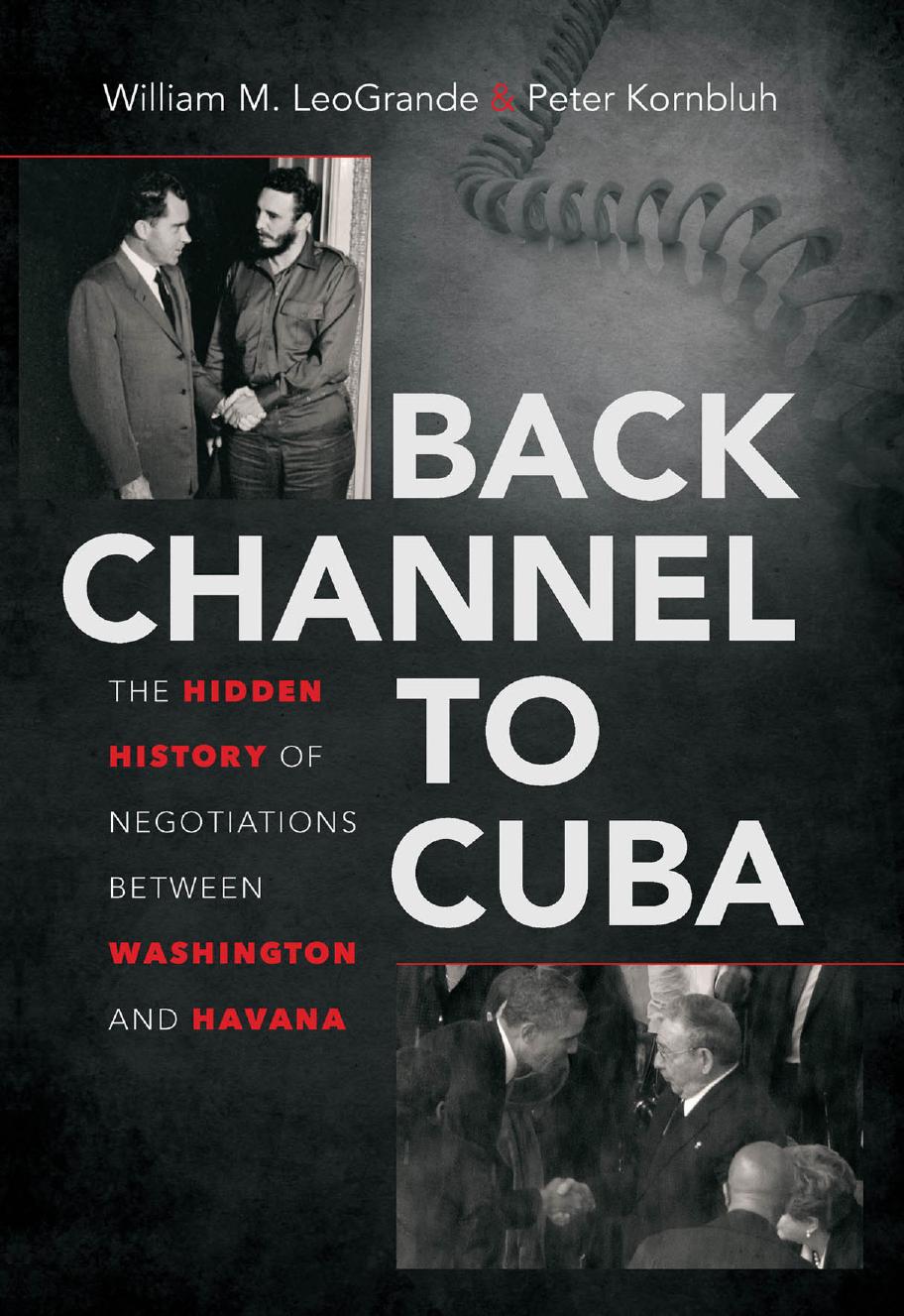
Author:William M. LeoGrande & Peter Kornbluh [LeoGrande, William M.]
Language: eng
Format: epub, pdf
Publisher: The University of North Carolina Press
Published: 2014-10-13T00:00:00+00:00
Cuba, Alone
Every president since Eisenhower had castigated Fidel Castro for presiding over a dictatorship, but none before Bush had demanded, as a condition of better relations, that Cuba undergo regime change. The issues on Washington’s agenda had always emphasized Cuban foreign policy—Havana’s support for revolution in Latin America and its expeditionary forces in Africa, as well as its strategic relationship with the Soviet Union. In early 1989, these were still the issues that Secretary Baker emphasized when he cabled U.S. diplomatic posts to deny rumors that Bush would improve relations with Cuba. By late 1989, however, Cuban troops had come home from Africa, Havana was normalizing relations with its Latin neighbors, and the Soviet Union was abandoning its strategic commitments abroad. The foreign policy issues had been rendered moot.
Yet better relations were still not in the cards. For Washington, the new international balance of forces revived the dream of rolling back the revolution. After the failure of the CIA’s covert operations to unseat Fidel in the 1960s, regime change in Cuba was not a practical possibility. But as the collapse of European communism sent the Cuban economy reeling, that calculus changed, and Washington’s demands changed with it. The United States, Bush declared, would normalize relations only if Cuba abandoned socialism and adopted multiparty electoral democracy. On May 20, 1991, Cuban Independence Day, Bush spelled out what he expected: “Our goals for the Cuban nation, shared by Cubans everywhere, are plain and clear: freedom and democracy, Mr. Castro, not sometime, not someday, but now. If Cuba holds fully free and fair elections under international supervision, respects human rights, and stops subverting its neighbors, we can expect relations between our two countries to improve significantly.”178 In short, Cuba could have normal relations with the United States only if it capitulated.
Download
Back Channel to Cuba: The Hidden History of Negotiations between Washington and Havana by William M. LeoGrande & Peter Kornbluh.pdf
This site does not store any files on its server. We only index and link to content provided by other sites. Please contact the content providers to delete copyright contents if any and email us, we'll remove relevant links or contents immediately.
| Anthropology | Archaeology |
| Philosophy | Politics & Government |
| Social Sciences | Sociology |
| Women's Studies |
The Secret History by Donna Tartt(19311)
The Social Justice Warrior Handbook by Lisa De Pasquale(12225)
Thirteen Reasons Why by Jay Asher(9004)
This Is How You Lose Her by Junot Diaz(6962)
Weapons of Math Destruction by Cathy O'Neil(6371)
Zero to One by Peter Thiel(5874)
Beartown by Fredrik Backman(5846)
The Myth of the Strong Leader by Archie Brown(5552)
The Fire Next Time by James Baldwin(5508)
How Democracies Die by Steven Levitsky & Daniel Ziblatt(5276)
Promise Me, Dad by Joe Biden(5192)
Stone's Rules by Roger Stone(5133)
A Higher Loyalty: Truth, Lies, and Leadership by James Comey(5020)
100 Deadly Skills by Clint Emerson(4975)
Rise and Kill First by Ronen Bergman(4840)
Secrecy World by Jake Bernstein(4804)
The David Icke Guide to the Global Conspiracy (and how to end it) by David Icke(4775)
The Doomsday Machine by Daniel Ellsberg(4557)
The Farm by Tom Rob Smith(4554)
